Designing with art in motion: how collectors shape yachts and private jets
Private aircraft and superyachts have moved from rare curiosities to standard tools of life for many UHNW families. They handle board meetings, family holidays, cultural trips, and quiet escapes from public attention. Purchase prices can range from tens to hundreds of millions of dollars. Running costs, from crew to fuel, often match prime real estate.
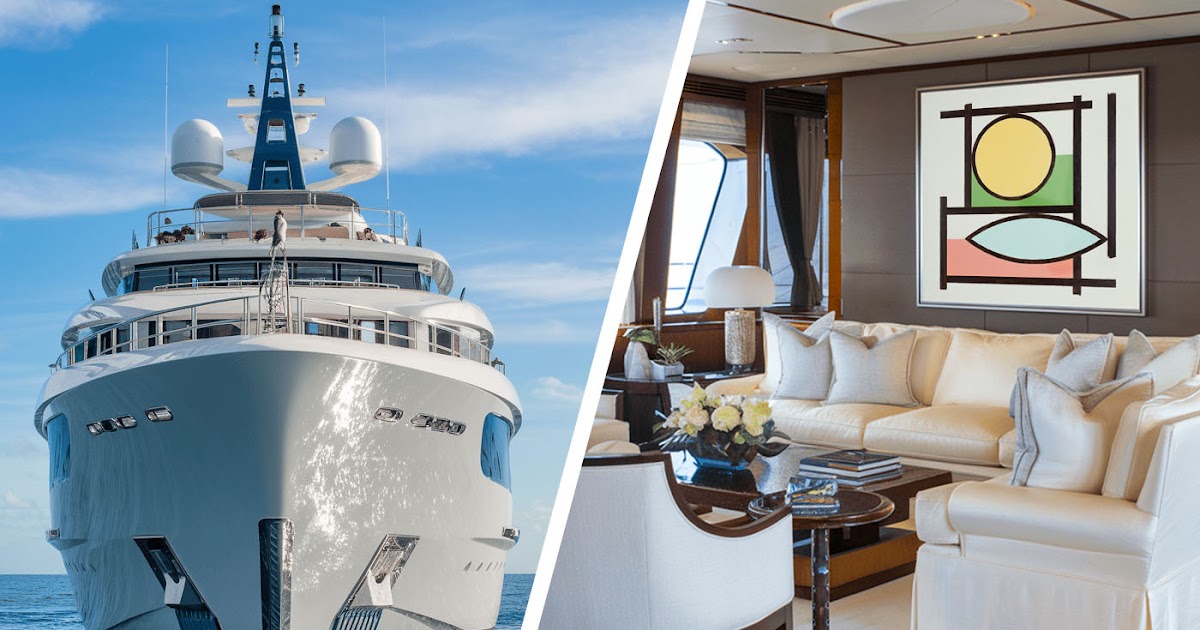
Yet for many owners, the real magic begins inside. A yacht’s profile or a jet’s livery might catch the eye; however, the intimacy of the interior shapes how a space feels to live in. Art is central to that experience. It can echo the movement of water, bring a favourite skyline on board, or carry a family story across generations.
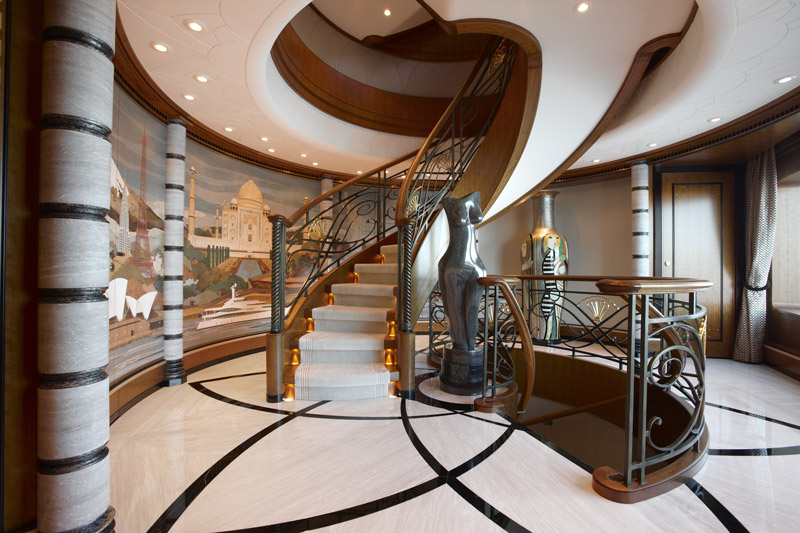
Luxury vessels as moving galleries
Yachts and aircraft may look similar on paper. In practice, every project reflects a completely different rhythm of life. Some clients use their aircraft primarily for business routes. Others treat a yacht as a floating second home for the extended family. The right art strategy responds to that pattern first, then to the vessel type.
From business to leisure: art curation across vessels
On smaller business jets, such as long-range models serving regional routes, art often has to work hard in tight settings. Pieces might be integrated into bulkheads or cabinetry rather than framed in a traditional way. Colour and line can reference a corporate identity, a personal passion, or a favourite landscape viewed from the air.
On larger wide-body aircraft, often used by heads of state or royal families, art is placed in a more ceremonial context. Here, works can reference national motifs, calligraphy, historical figures, or diplomatic themes. The pieces must remain tasteful, discreet, and timeless, since occupants and guests may change often.
Yachts tell a slightly different story. Many GCC-based owners now favour vessels between 60 and 120 metres. These yachts may shift between private family use and high-end charter seasons. Art then needs to please the principal while still appealing to an international guest list. Smaller yachts under 50 metres often lean towards intimate, restorative atmospheres, where art helps create a calm, personal refuge.
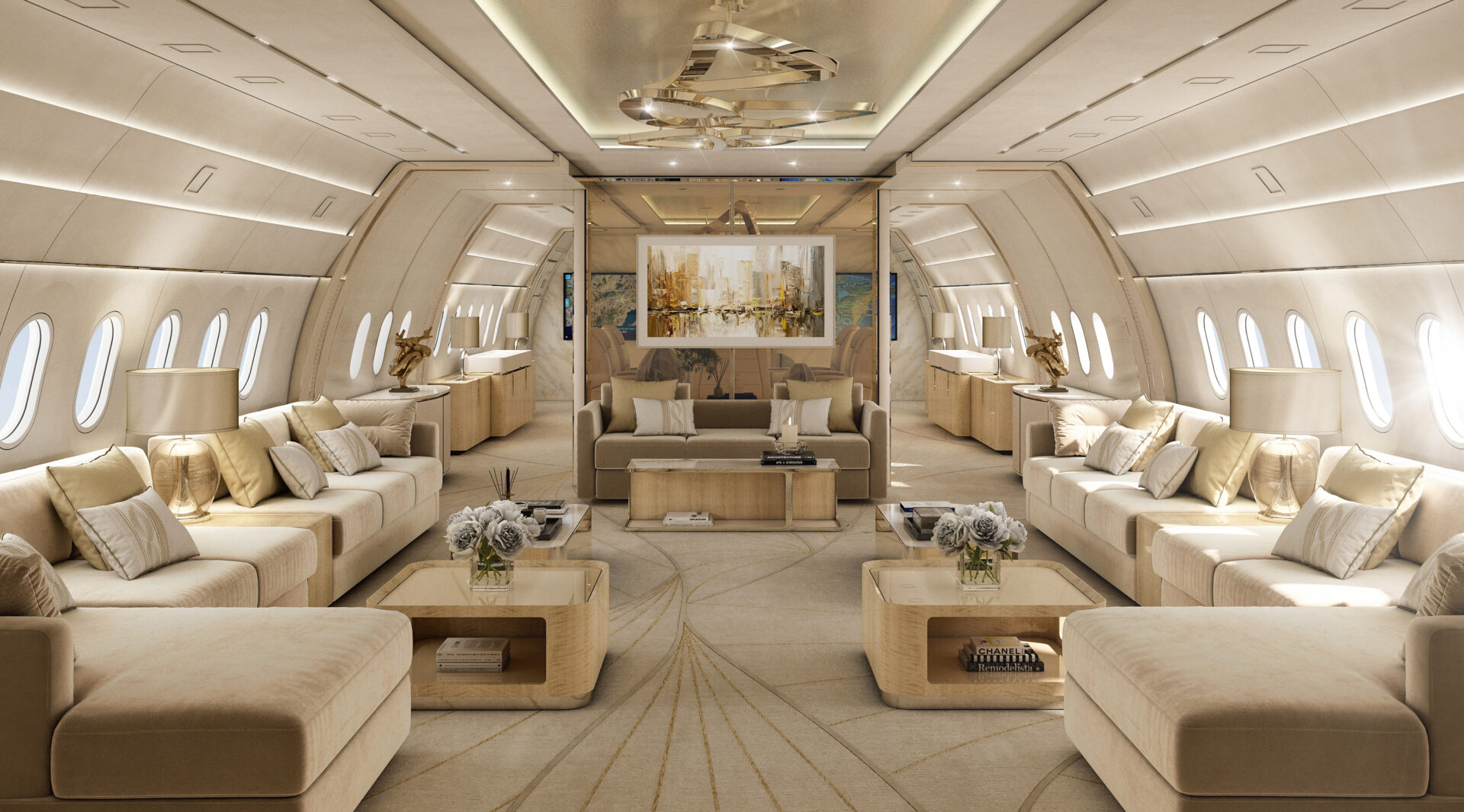
A patron of the arts: legacy in motion
History is full of patrons who used architecture as a canvas. Think of chapels, palaces, and grand civic buildings with ceilings and frescoes funded by powerful families. Today, that impulse to commission sits on hulls and airframes rather than stone.
Modern collectors have access to tools that early patrons could never have imagined. A jet can carry an exterior livery inspired by a starry night sky. A yacht’s staircase can wrap around a sculptural installation that feels like swirling sea spray. Salvator Mundi once travelled on a mega-yacht. That detail alone shows how closely art, prestige, and mobility now intersect.
For many owners, the vessel becomes a portable house museum. It is a place where children grow up around specific works, where friends encounter new artists, and where a family narrative is quietly written in paint, glass, textile, and light. The collection becomes a living expression of values, not simply decoration.
Inside the new era of custom-made consumerism
The global population of millionaires and billionaires has grown significantly in recent decades. More capital sits in private hands, often with greater flexibility than traditional institutions. At the same time, there is fatigue with generic luxury. Many clients do not want another standard fit-out that could belong to any anonymous owner.
This shift feeds a wider culture of bespoke experiences. Owners commission unique tableware, handmade carpets, and one-off furniture. Art naturally joins that list. Instead of buying off-the-shelf prints, collectors are now asking for site-specific installations, custom murals, or textile works woven to fit precise curves and ceiling heights.
For clients in the Gulf and across Asia, this often spans cultures. A family may wish to combine local craft traditions with European contemporary painting or Japanese minimalism. Art then becomes a bridge, linking home cities like Dubai, Doha, Singapore, and Mumbai to the wider world their vessels traverse.

Five ways art transforms superyachts and aircraft
Although every project is unique, several themes recur when we advise on collections for the sea and the sky.
1. How design schemes take shape
A single commissioned work can guide the entire interior palette, influencing joinery, fabrics, lighting, and spatial rhythm. When integrated with intention, it becomes part of the architecture rather than an afterthought.
2. When aesthetics meet practical needs
Specialist materials such as textiles, carved timber, or layered glass can soften acoustics, reduce glare, or disguise high-traffic areas. These details enhance day-to-day comfort for guests and crew.
3. A mirror of values and identity
Collectors increasingly want their vessels to reflect personal principles. Commissioning directly from studios can support sustainable practice, nurture creative careers, and offer a more meaningful connection with the works on board.
4. A considered approach to asset building
Many owners view commissioned pieces as part of a broader wealth preservation strategy. With careful management of cataloguing, insurance, and taxation, works can hold long-term value as both cultural and financial assets.
5. A pathway to wellbeing at sea and in the air
Colour, texture, and form can act as restorative tools during demanding travel. Cool palettes, natural materials, and tactile surfaces help create calm, grounding environments for extended journeys.
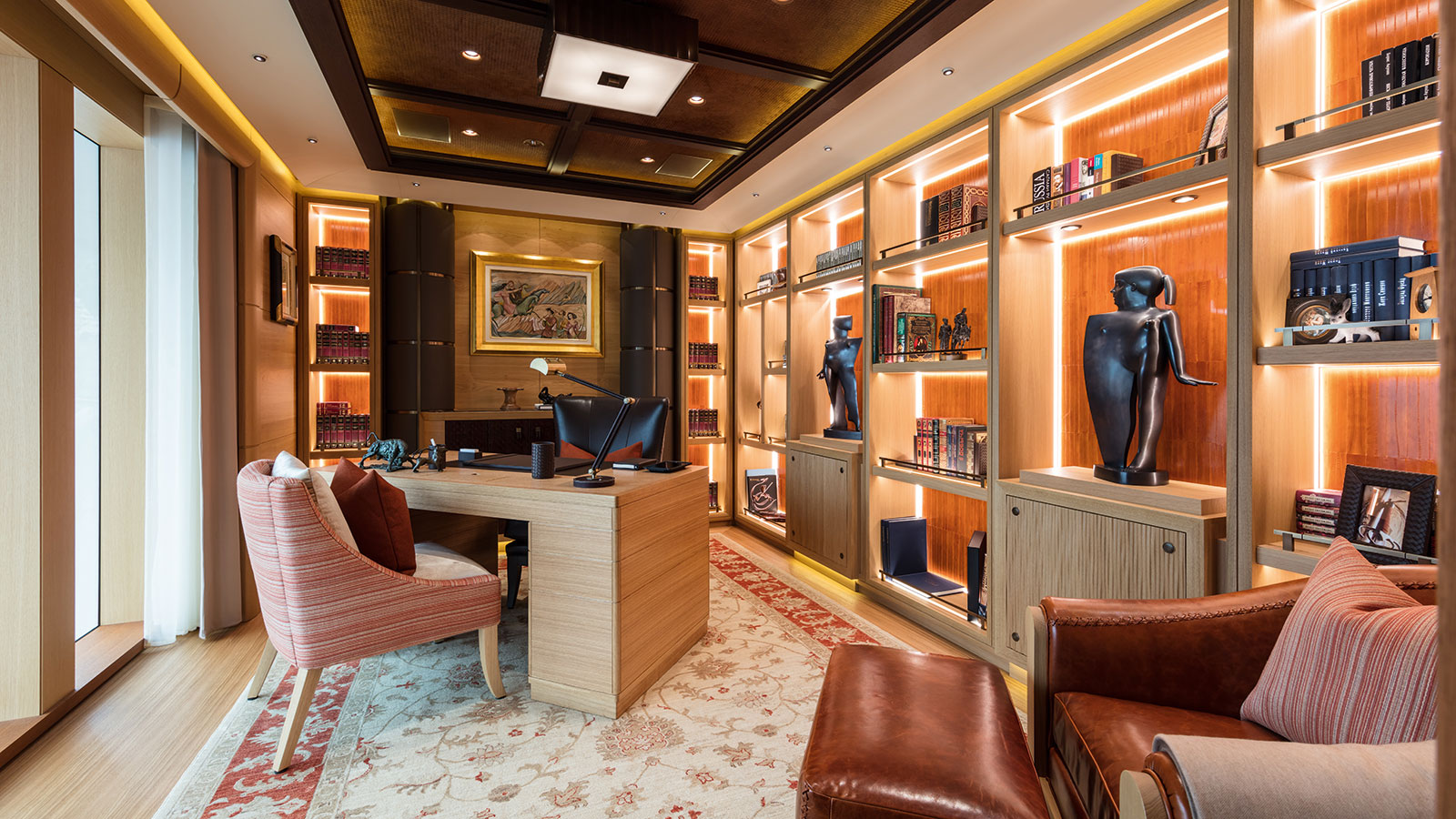
Bringing ambitious ideas to life
The most memorable projects tend to begin with a simple question. What would you create if there were no limits on scale, material, or setting? From there, the task is to make that vision safe, feasible, and coherent with the rest of the interior.
Some owners gravitate towards dramatic glass chandeliers that move visually with the ship’s motion. Others prefer a quiet, contemplative mural that stretches the length of an owner’s suite. Large curved staircases invite sculptural interventions that would be impossible in a typical apartment. Yachts and jets offer volumes that encourage bold thinking, provided that the engineering is respected.
In parallel, regulation across both sectors is tightening in the name of sustainability. Hybrid propulsion, stricter fuel rules, and new standards for refit yards are reshaping design choices. It makes sense to carry the same ambition into art. Collectors increasingly ask for pieces that use responsible materials, humane production methods, and energy-conscious fabrication.
Client focus, team effort
Although the art must always reflect the client’s world, no project sits in isolation. Successful commissions for yachts and aircraft depend on a carefully aligned team.
On a typical project, you might see the owner’s office, the shipyard or completion centre, the lead interior designer, project managers, engineers, classification societies, insurers, and multiple artist studios. Each group holds different priorities. Some focus on structure and safety. Others care most about timelines, cost control, or visual impact.
The art advisor’s role is to translate between these languages. We take a client’s abstract preferences and turn them into actionable briefs that artists can work from. At the same time, we ensure that every piece can pass technical reviews, survive the journey from studio to yard, and sit comfortably within the planned interior. Tension between creativity and constraint is normal. It can actually produce stronger, more inventive work when handled with respect.
Refits add another layer. New builds often take four or five years. Many owners now look to refit older yachts or repurpose commercial vessels instead. Art can help tell the story of that transformation. For example, reclaimed elements from a vessel’s earlier life may appear in newly commissioned works, giving depth and continuity to the interior.
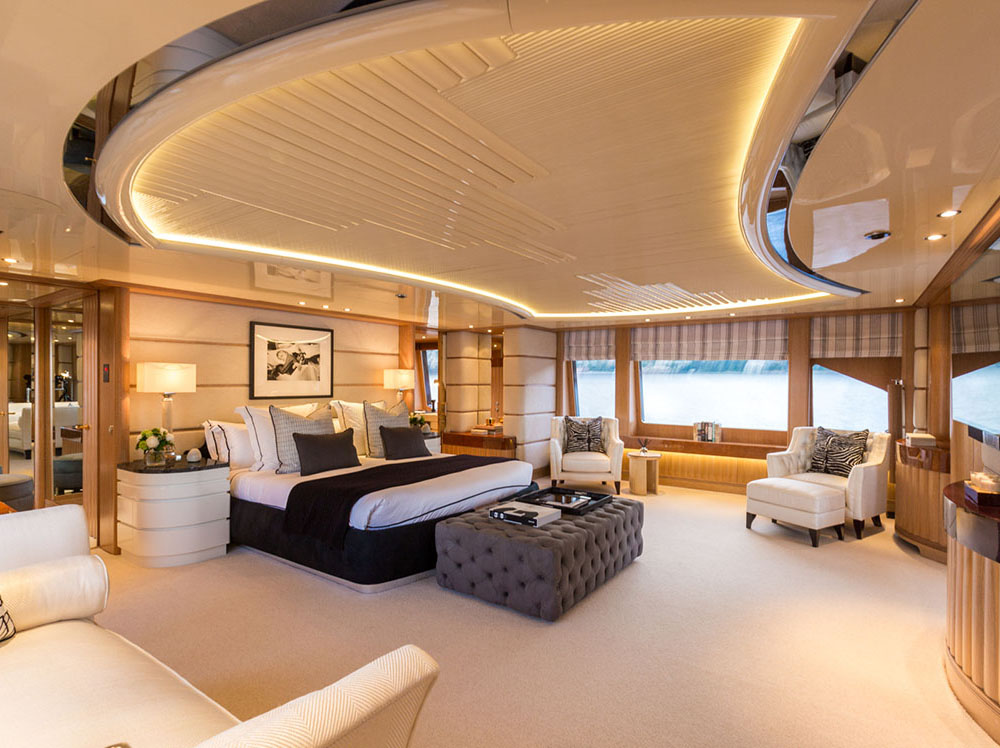
The slow movement and sustainable artistry
Across the wider art market, there is growing interest in slower, more craft-led practices. Collectors are seeking textiles woven by hand, ceramics fired using traditional techniques, and timber works made from salvaged or fallen wood. These pieces carry a sense of place and time that industrial finishes cannot copy.
For yachts and aircraft, this slow movement can be especially powerful. Vessels already rely on advanced manufacturing and complex supply chains. Balancing that with works that celebrate hand, material, and patience creates a richer contrast. Wall pieces made from felted wool, woven grasses, or carefully layered timber panels bring tactility into sleek cabins.
Sustainable practice can also shape the narrative of a refit. An older vessel might gain new life through art that references its history, original routes, or previous owners. Rather than erasing the past, the collection acknowledges it. For clients in regions with strong heritage crafts, such as the Middle East or South Asia, there is also an opportunity to support local makers and bring those traditions into an international context.
High-flying technical challenges at 40,000 feet
Commissioning art for aircraft involves a unique blend of passion and paperwork. Every creative idea must pass through layers of certification. These rules exist for good reasons. They protect passengers, crew, and the aircraft itself. Yet they can feel opaque for first-time buyers.
Consider a long-range jet with an art feature painted directly onto a bulkhead panel. The artist may work in their studio as usual. However, the panel itself must then pass flammability and toxicity tests in a specialist facility. Engineers will review the fixings. Completion centres will study how the piece behaves under weight, pressure, and temperature changes.
Several technical issues appear on almost every aviation project:
- Flammability: paints, textiles, and substrates must pass strict burn and smoke tests.
- Toxicity: materials should emit minimal harmful fumes, both in normal use and in a fire.
- Temperature and pressure: works must withstand cabin cycling, storage conditions, and extreme temperature and pressure ranges.
- Weight: Every additional kilogram affects performance. Lightweight cores and smart mounting systems help.
- Structural integrity: pieces must stay secure during turbulence and meet crash-load standards.
When artworks cannot be fully certified as integrated elements, there is another route. Some clients choose non-integrated or “loose” work that can be removed before certification checks or maintenance. These pieces can still be meaningful and well-made. They simply sit closer to the world of portable collecting, rather than the world of fixed interior architecture.
The key is to decide early which path fits your risk comfort, timeline, and budget. That decision will shape the types of artists, materials, and fabrication partners involved.
Planning a project that deserves a collection
For owners, family offices, and design teams, the most valuable step is often the first conversation. It is the moment when you move beyond mood boards and ask deeper questions. How do you want this vessel to feel when you walk on board after a long flight? Which stories should it tell your children or future guests? How might the collection sit within your broader portfolio, across homes and offices?
From there, an experienced advisor can map the journey. That might include clarifying budget bands, shortlisting artists, coordinating with designers and yards, and planning for documentation, insurance, and eventual resale or inheritance. The aim is simple. Your yacht or aircraft should feel unmistakably yours, yet also remain flexible enough to evolve as your tastes, routes, and priorities shift over time.
At Zurani, we work with clients across the Gulf, Europe, and Asia to build collections that move gracefully between land, sea, and sky. Whether you are planning a new build, a refit, or a first aircraft acquisition, we can help you commission art that honours both engineering realities and emotional truths.
Contact us at +971 58 593 5523, email us at contact@zurani.com, or visit our website at www.zurani.com/.