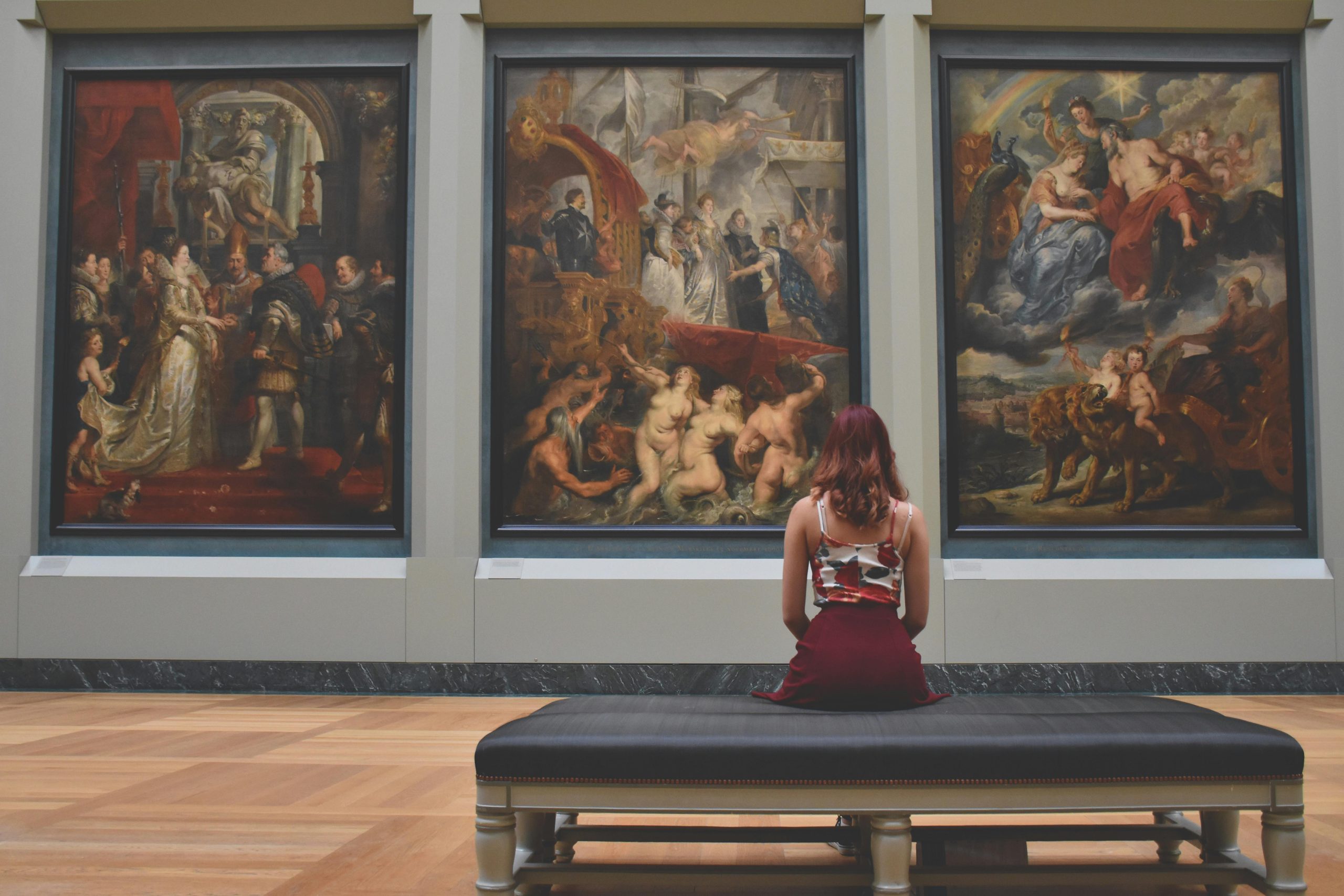
Beyond market cycles, the true measure of art lies in its ability to preserve meaning, identity and cultural influence across generations
Capital is designed to grow, move and multiply. It shifts across markets, generations and jurisdictions. It compounds, contracts and reallocates. Yet history shows that capital rarely remains intact forever.
Art, however, operates on a different timeline.
Across centuries, financial fortunes have risen and dissolved. Dynasties have expanded and fragmented. Currencies have strengthened and collapsed. Yet the artworks commissioned, collected and preserved by those same fortunes often endure — not merely as assets, but as cultural anchors.
This raises a compelling question for modern collectors and families: can art outlive capital?
When wealth fades, but cultural legacy remains
The impermanence of financial dominance
Few financial empires survive unchanged across multiple generations. Economic cycles, taxation, geopolitical shifts and diversification pressures inevitably reshape capital structures. Even well-managed fortunes are diluted over time.
In contrast, art frequently transcends these transitions. Masterworks collected centuries ago remain institutionally relevant. Paintings once held in private palaces now anchor museum collections. Sculpture commissioned during periods of extraordinary wealth continues to define cultural narratives long after the capital that funded it dissipated.
The endurance of art lies not in liquidity, but in meaning.
Art as a vessel of memory
Financial assets are abstract. Art is tangible.
A portfolio can be restructured in seconds. A painting carries provenance, context and story. It connects generations not only through value, but through shared experience and identity.
For families, art often becomes the most emotionally resonant component of inherited wealth. It represents taste, conviction and cultural engagement. When properly stewarded, it serves as a narrative thread across time.
This narrative quality enables art to retain relevance even when financial power recedes.
Institutional integration and permanence
Art that achieves institutional recognition gains a form of permanence independent of private capital. Once embedded in museum collections, academic research and public exhibitions, its relevance extends beyond its market price.
Institutional validation creates cultural infrastructure around an artwork. It anchors it within art history rather than simply the art market.
Collectors who understand this distinction often prioritise institutional trajectory alongside commercial metrics. Over long horizons, cultural integration tends to outlast financial volatility.
Capital accumulation versus cultural accumulation
Financial capital compounds numerically. Cultural capital compounds relationally.
As artists gain scholarly attention, as works are exhibited internationally and as collectors lend to institutions, the artwork accumulates meaning. That accumulation strengthens its resilience across cycles.
Even in moments of market contraction, works with deep cultural embedding tend to recover more steadily than speculative acquisitions driven purely by momentum.
Time reveals which artists hold narrative weight.
When collections fragment
Of course, art does not automatically outlive capital. Without structure and stewardship, collections can fragment through inheritance disputes, forced sales or lack of governance.
When documentation is incomplete or succession planning is delayed, cultural continuity weakens. Art may disperse without preserving its intellectual coherence.
The longevity of art, therefore, depends not only on the object itself, but on the systems surrounding it.
Stewardship as the bridge between wealth and permanence
Families who treat art as part of long-term governance rather than short-term acquisition are more likely to preserve cultural continuity.
Stewardship includes careful provenance management, conservation planning, valuation updates and strategic decisions around institutional lending. It also requires preparing the next generation to understand not only market value but historical context.
Without intentional knowledge transfer, art risks becoming a financial asset divorced from its narrative depth.
Beyond price: Defining enduring value
Market prices fluctuate. Records are broken and surpassed. Speculative surges can create temporary distortions.
Yet the most enduring artworks often derive their strength from intellectual significance rather than short-term valuation peaks. Movements that reshape art history, artists who influence generations and works that capture defining cultural moments possess durability beyond economic cycles.
Collectors who build with a generational horizon understand that cultural relevance often proves more resilient than price volatility.
Art in times of capital transition
Periods of significant wealth transfer, such as the current generational shift, intensify these dynamics. As collections move between heirs, strategic decisions determine whether art remains a cohesive legacy or becomes a dispersed asset base.
This moment presents both risk and opportunity. Reassessment can weaken continuity, but it can also strengthen it. Families who engage proactively with advisory support often transform inherited collections into structured long-term cultural strategies.
In doing so, they increase the likelihood that art will outlast the original capital that acquired it.
The philosophical dimension
There is also a deeper dimension to this question. Capital measures purchasing power. Art measures meaning.
Throughout history, the works that define eras were often funded by wealth that no longer exists in its original form. Yet the artworks remain as markers of identity, belief and aspiration.
In this sense, art does not merely survive capital. It reframes it.
Designing for endurance
For contemporary collectors, the objective is not simply acquisition. It is endurance.
Building with a multi-decade perspective, aligning purchases with institutional relevance, diversifying thoughtfully and embedding governance frameworks all increase the probability that art will retain coherence and influence beyond financial cycles.
Art may not guarantee permanence. But when approached with discipline and vision, it has a remarkable capacity to transcend the lifespan of the capital that created it.
Where permanence begins
Financial capital measures success in years. Cultural capital is measured in generations.
The question is not whether art always outlives capital. It is whether collectors build in a way that allows it to.
When art is treated as strategy rather than spectacle, and stewardship replaces impulse, it gains the potential to endure far beyond market cycles, and perhaps even beyond the fortunes that first brought it into being.