What serious collectors should understand about emerging European trajectories
In the contemporary European art landscape, visibility can arrive quickly. What is rarer is measured, sustained ascent.
Louise Giovanelli represents a compelling example of the latter.
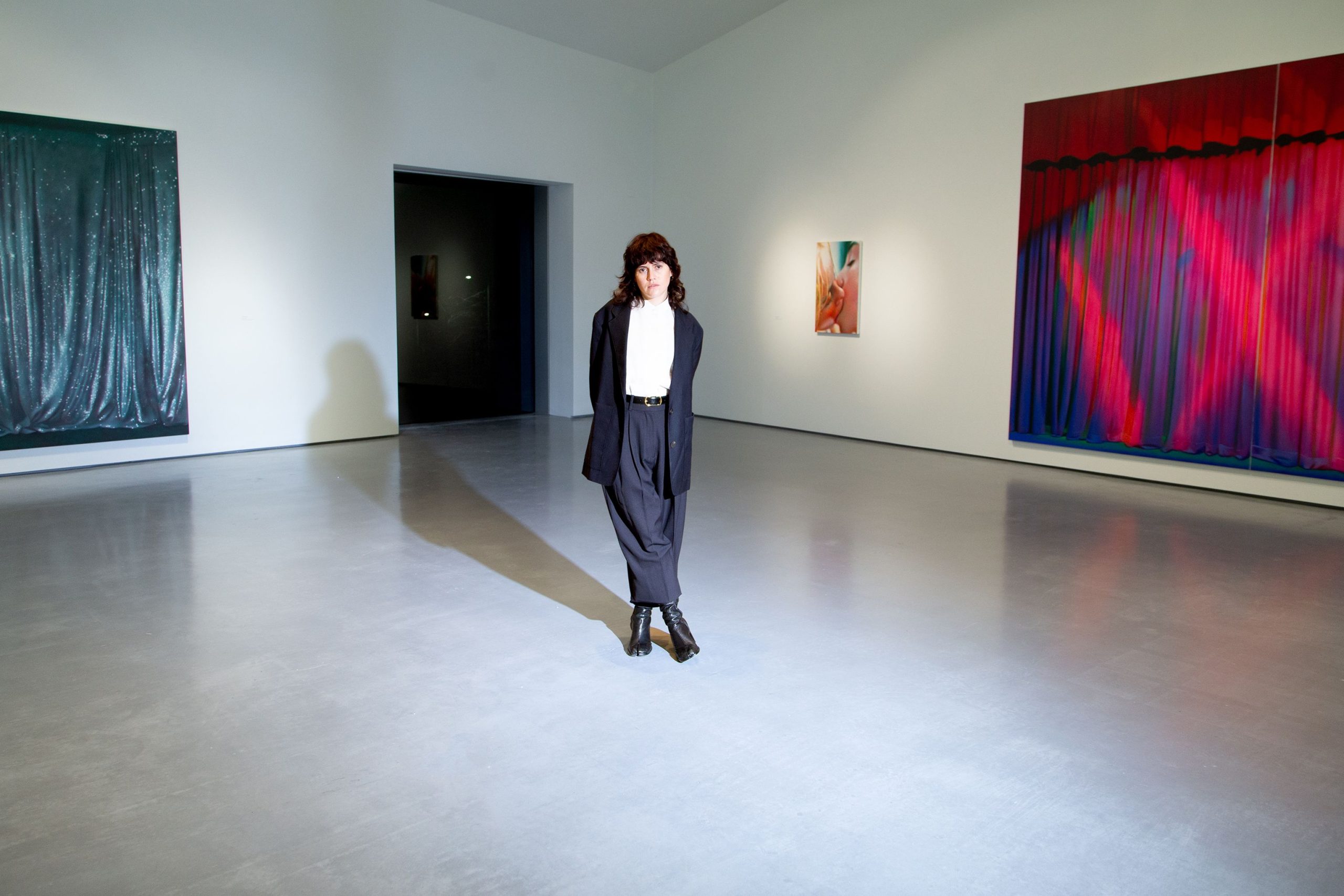
Born in 1993 and based in Manchester, Giovanelli has developed a body of work that sits at the intersection of historical reference and contemporary sensibility. Her paintings often draw from film stills, religious iconography and staged imagery, rendered with a precision that feels both cinematic and restrained.
For collectors looking at emerging European artists through a strategic lens, her trajectory offers something more important than rapid momentum: it demonstrates the early signs of institutional gravity.
A practice rooted in control and restraint
Technique as differentiation
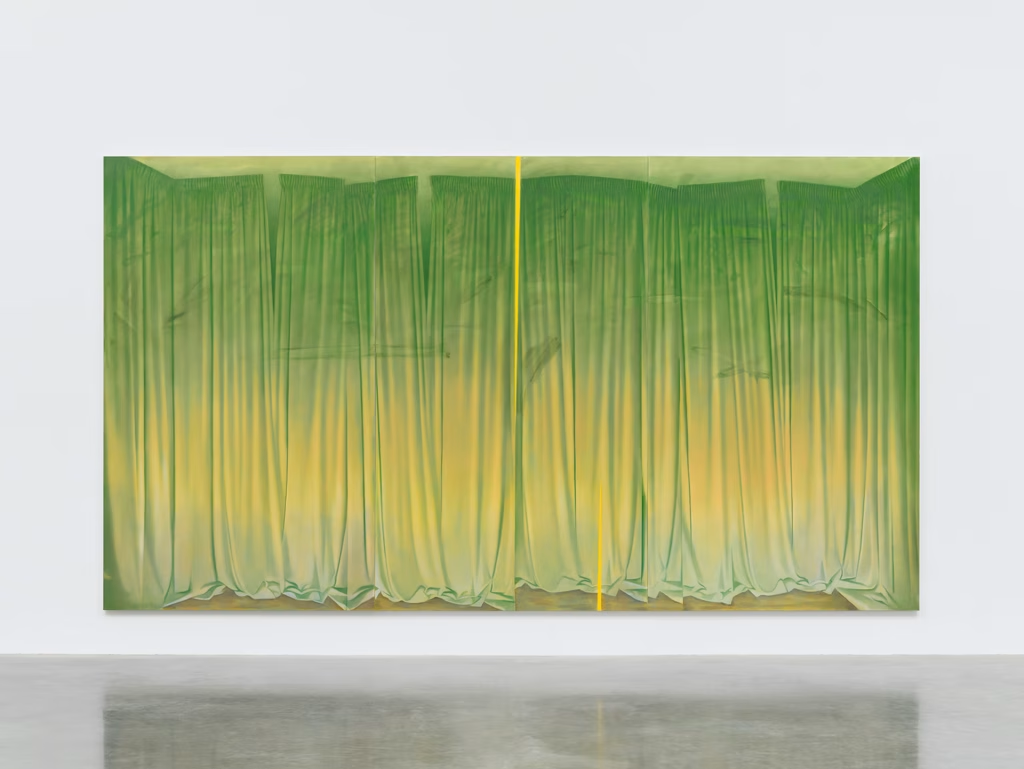
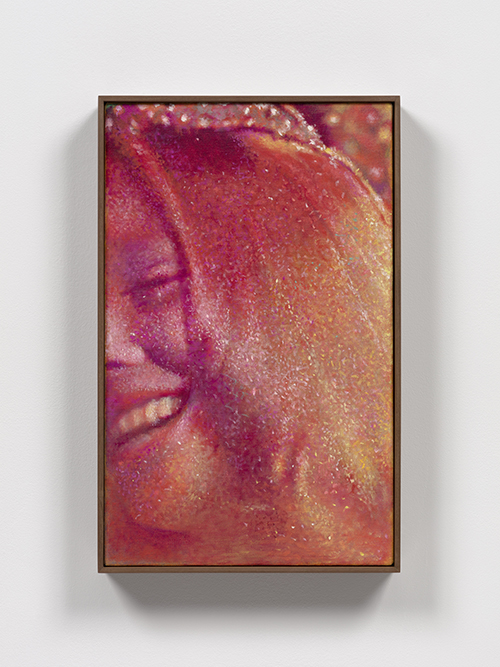
Giovanelli’s paintings are immediately recognisable for their surface control. Working in oil, she layers thin glazes to produce luminous, almost airbrushed finishes. Her compositions frequently isolate fragments – a hand, fabric, a beam of light – removing context to heighten tension.
This discipline matters.
In a market where gestural expression and scale can dominate early-career visibility, Giovanelli’s restraint positions her differently. The work does not rely on spectacle. It relies on control.
For long-horizon collectors, technical coherence is not incidental. It forms the basis of durability.
Dialogue with art history
Giovanelli’s work frequently references art historical and cinematic traditions, yet avoids overt quotation. Instead, she abstracts moments, extracting atmosphere rather than narrative.
This subtlety creates interpretive depth. The paintings feel familiar but unresolved, suspended between memory and invention.
Artists who engage in meaningful dialogue with historical precedent often attract stronger institutional interest over time. The work lends itself to curatorial framing, academic discussion and contextual exhibition.
That dynamic becomes relevant when assessing the long-term trajectory.
Institutional positioning
Giovanelli has already secured exhibitions at respected European institutions and galleries. Her inclusion in curated programmes signals that her practice is being examined critically rather than simply traded.
For collectors, this distinction is central.
Early-career artists can experience price acceleration driven solely by gallery demand. What stabilises that trajectory is institutional engagement, museum exhibitions, inclusion in public collections, and participation in serious curatorial discourse.
Institutional visibility does not guarantee permanence. But it does suggest structural support.
Market momentum versus structural growth
Giovanelli’s market has shown steady development rather than explosive speculation. That pacing can be advantageous.
Rapid early spikes often create fragility. Gradual, consistent placement through respected galleries and institutions tends to build a more stable collector base.
For emerging European artists, sustainable growth often depends on this balance between commercial demand and curatorial endorsement.
European context and cross-border appeal
European contemporary art remains deeply interconnected across London, Paris, Berlin and other cultural centres. Artists who successfully navigate this ecosystem gain access to both regional and global collectors.
Giovanelli’s practice sits comfortably within this network. Her visual language travels across borders while maintaining conceptual integrity.
This cross-border adaptability increases resilience.
Risk considerations
No emerging artist is without risk. Trajectories can plateau. Institutional interest can slow. Market attention can shift.
Collectors assessing emerging European talent should evaluate:
- Depth of gallery representation
- Curatorial consistency
- Institutional acquisitions
- Production capacity and discipline
- Critical reception beyond promotional media
Giovanelli’s measured output and controlled aesthetic suggest awareness of sustainability rather than acceleration.
Why this matters now
The European emerging scene is competitive. Attention cycles move quickly. Social visibility can amplify rapidly.
Yet serious collectors understand that long-term relevance is rarely built on speed alone.
Artists whose practices demonstrate technical discipline, historical awareness and institutional integration often possess stronger structural foundations.
Giovanelli’s trajectory is still unfolding. That is precisely why it merits close attention.
Possibility with structure
Emerging artists represent possibility.
The question for collectors is whether that possibility is speculative or structural.
In the case of Louise Giovanelli, the signs point toward thoughtful, deliberate growth, the kind that rewards patience rather than urgency.
For collectors building with a generational horizon, those signals matter more than momentum alone.