Why collectors are turning to material-led abstraction and the artists redefining the category
Textile-based abstraction has moved from the margins of contemporary practice into the centre of global collecting. Once viewed as a secondary or craft-adjacent medium, it now holds a position of authority across museums, biennales and auction rooms. The shift has been gradual but unmistakable. As collectors seek material innovation, cultural depth, and tactile presence, textile abstraction has emerged as one of the most compelling categories of the last decade.
The rise is not a trend. It reflects a deeper reorientation in contemporary art, one that values process, labour, cultural memory and the physicality of materials. From handwoven structures to gold-leaf fibre compositions, textile abstraction has become a space where artists innovate with a freedom that challenges long-held hierarchies within modernism and contemporary art.
A medium once overlooked now leads the conversation
Throughout much of the twentieth century, textiles were positioned outside the canon of fine art. They were associated with domestic craft, applied arts or ethnographic collections. The modernist project often prioritised painting and sculpture, leaving fibre-based practices on the periphery despite the groundbreaking work of artists active at the time.
In the last twenty years, institutions have rewritten this narrative. Exhibitions dedicated to weaving, fibre art and material abstraction have reframed the medium within an international context. This curatorial shift created a new foundation for collectors, who began to see textile abstraction as an essential component of postwar and contemporary practice.
Key artists shaping collector appetite
A number of artists have played a defining role in the re-evaluation of textiles as a fine art medium. Their presence in major museum collections, international exhibitions and auction results has expanded the category and increased its visibility.
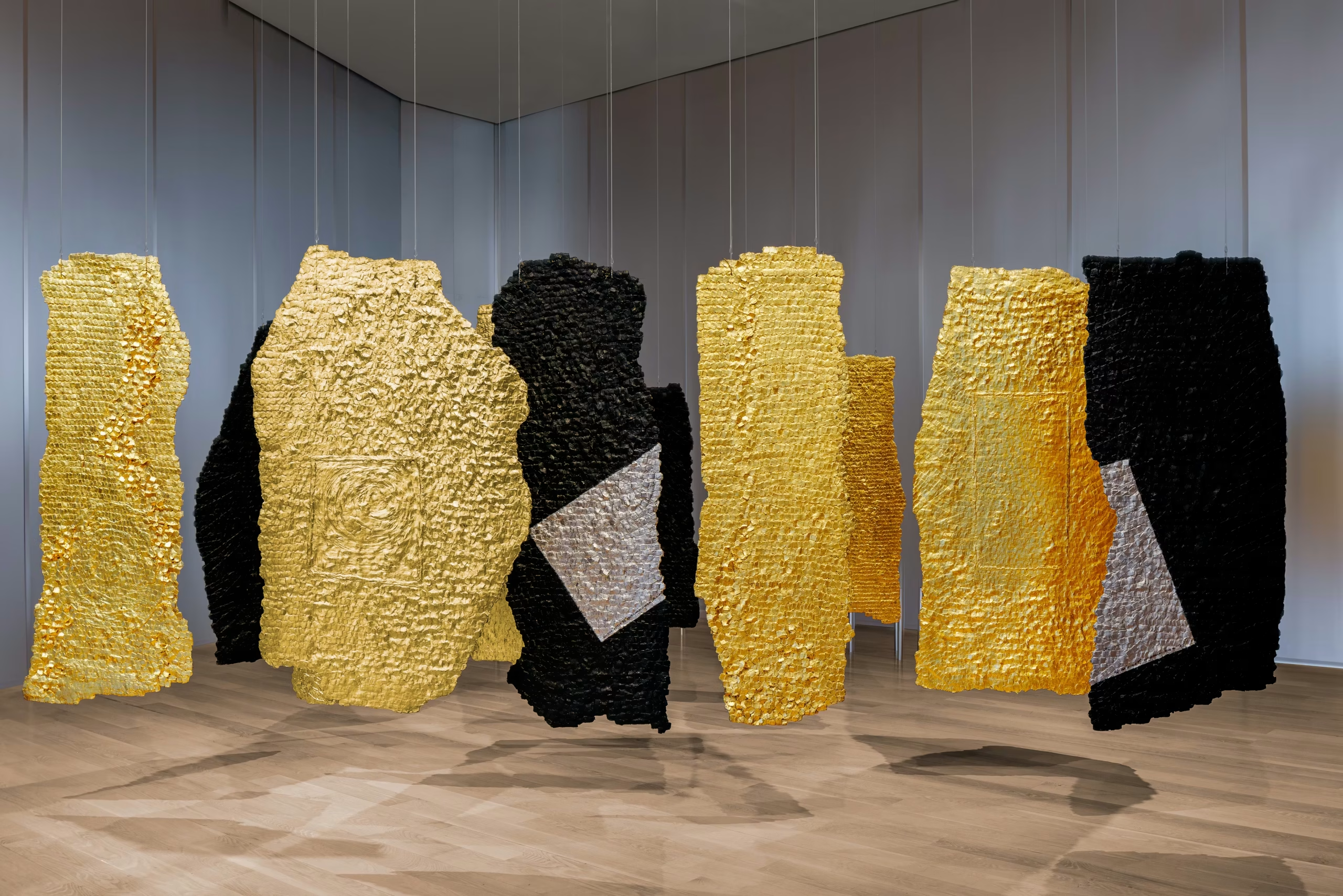
Olga de Amaral stands at the forefront of this movement. Her gold-leaf fibre works have become sought after among collectors who recognise the sophistication of her technique and the architectural presence of her compositions. Her recent result at Christie’s placed her firmly within the blue-chip conversation.
Igshaan Adams, working at the intersection of sculpture, weaving and installation, has brought a new dimension to fibre art. His practice blends cultural identity, performance and spatial structure, creating works that resonate both emotionally and conceptually.
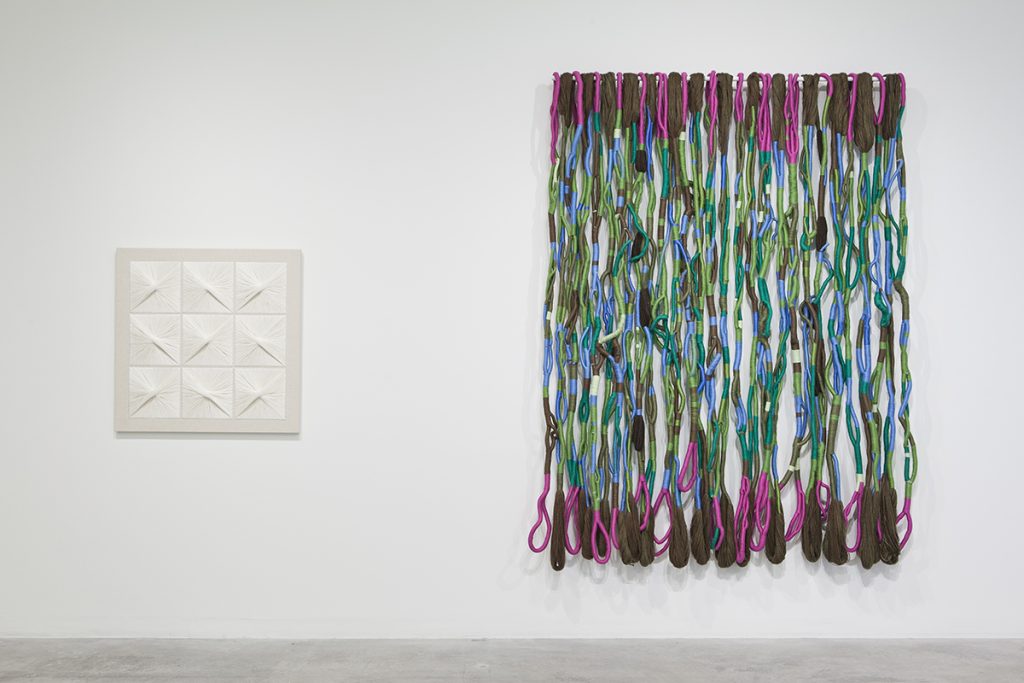
Sheila Hicks continues to shape the field with works that merge colour theory and architectural sensibility. Her influence on younger generations is profound, and her market remains consistently strong across institutions and private collectors.
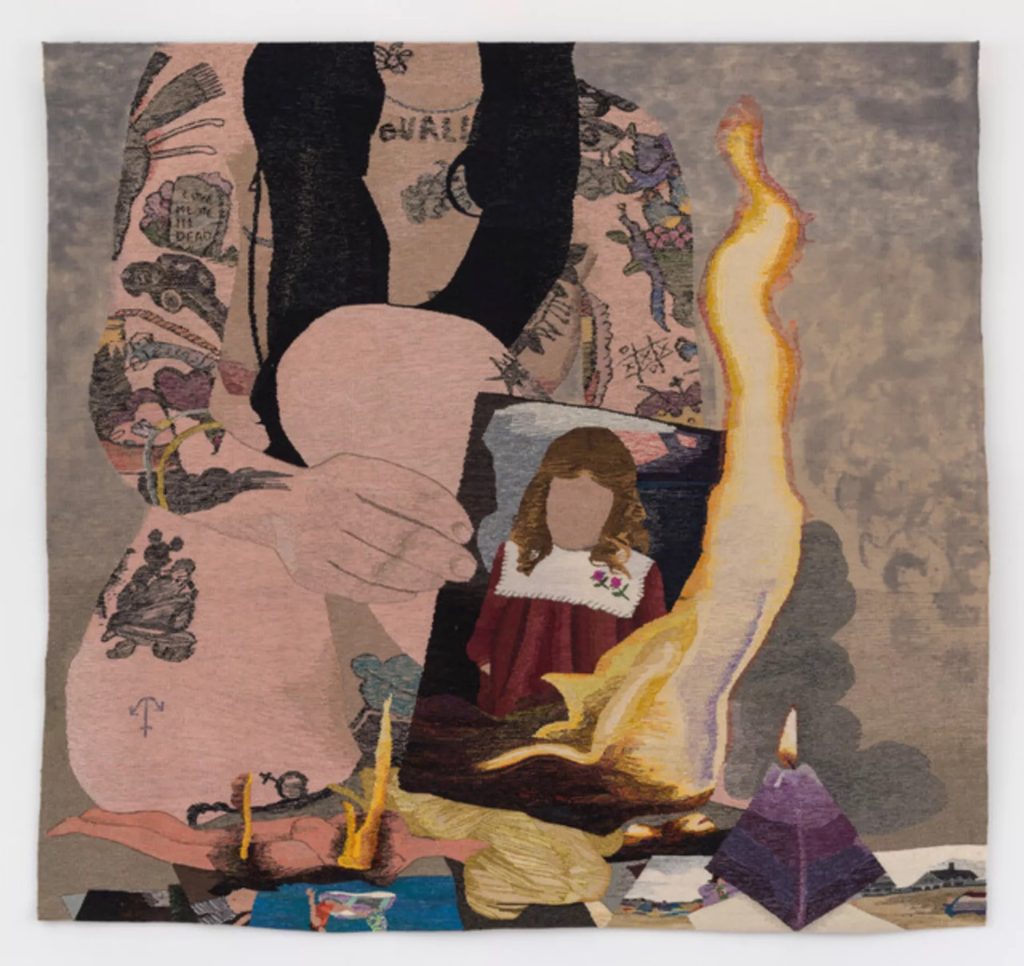
Erin M. Riley, Diedrick Brackens, Anni Albers, Ruth Asawa and El Anatsui also contribute to the category’s expansion. Although their approaches differ, they share a commitment to material innovation and abstraction that challenges traditional categories of painting and sculpture.
Market dynamics behind the rise
Collectors have become increasingly attentive to mediums that embody both visual impact and material sophistication. Textile abstraction offers a unique balance. Works often possess a sculptural quality, yet they hang with the quiet confidence of paintings. This combination opens the category to collectors who appreciate hybrid forms that blur boundaries.
Auction results reflect the momentum. Competitive bidding for textile-based works has grown steadily across international sales. Records set by Amaral and strong demand for Adams and Hicks show that collectors are not simply following a trend. They are recognising the longevity and artistic merit of the medium.
Advisers and curators also highlight the rarity factor. High-calibre textile works often take considerable time to produce. The labour, scale and intricacy involved mean that the supply of top-tier pieces remains limited. This scarcity, combined with institutional attention, continues to support value stability.
Materiality in an increasingly digital world
As the digital environment accelerates, collectors have become drawn to physicality. The tactility of textile abstraction offers a counterpoint to virtual life. It invites closeness and rewards slow looking. Many contemporary collectors describe these works as grounding, meditative and deeply connected to human experience.
Textile abstraction also holds a cross-cultural resonance. The medium appears in historical practices across continents. Artists today extend those traditions into a contemporary language that speaks to global audiences. The result is a category that feels both rooted and forward-looking.
What the rise means for collectors
For new and seasoned collectors, textile-based abstraction offers several advantages. The category is still expanding, meaning there are opportunities to acquire strong works before prices reach the upper tiers common in more established mediums. At the same time, top artists in the field already enjoy strong institutional support, suggesting long-term stability.
For those building or refining collections, textile abstraction provides a powerful dialogue with painting, sculpture and installation. It introduces texture, depth and material nuance, while expanding the conceptual reach of a collection.
The future of textile abstraction
The upward trajectory of textile-based abstraction shows no sign of slowing. With continued institutional recognition, ambitious museum exhibitions and strong market performance, the medium is set to play an increasingly visible role in the contemporary landscape. Collectors today are not looking at textiles as a secondary category. They are approaching it as one of the most intellectually and materially exciting fields of the moment.
If you are interested in exploring textile-based abstraction or wish to discuss opportunities to acquire works by leading artists in this category, contact Zurani at +971 58 593 5523 or email contact@zurani.com.