
Singapore
Art investment in Singapore
One of the region’s leading art investment advisers to family offices, investors and collectors, backed by a leadership team with over 90 years of combined experience in art, finance, private advisory, law and related markets.
Abu Dhabi · Dubai · London · Doha
Our position
Advisory for investors, collectors and family offices
Galleries, dealers and auction houses are essential market partners. Zurani helps collectors assess opportunities with their own objectives firmly in focus.
We work with principals, collectors and family offices in Singapore who either hold significant collections or intend to build them, and who expect art to be managed with the same discipline as any other asset in their portfolio.
The art market is unregulated, opaque, and relationship-driven. Success depends on access, judgement and advice aligned with the collector’s interests. Our only interest is the strength of your position.
The market
Why Singapore matters to international collectors
Singapore is one of Southeast Asia’s established cultural and financial centres, and a well-connected base for collectors and family offices operating across the region.
A regional base for collectors and family offices
Singapore is a significant base for private wealth in Asia, supported by an established community of single family offices and a mature professional infrastructure of legal, tax, banking and fiduciary advisers. For collectors, that means the people who manage the rest of the balance sheet are already close at hand, and a collection can be governed with the same formality as any other asset.
Connections across Southeast Asia and international markets
Singapore sits at the centre of Southeast Asia’s collecting communities while remaining closely connected to markets in North Asia, Europe and the United States. Its position, transport links and customs infrastructure make it a practical place from which to acquire, hold and move works internationally, and a place where cross-border movement needs to be planned rather than assumed.
A strong specialist and institutional ecosystem
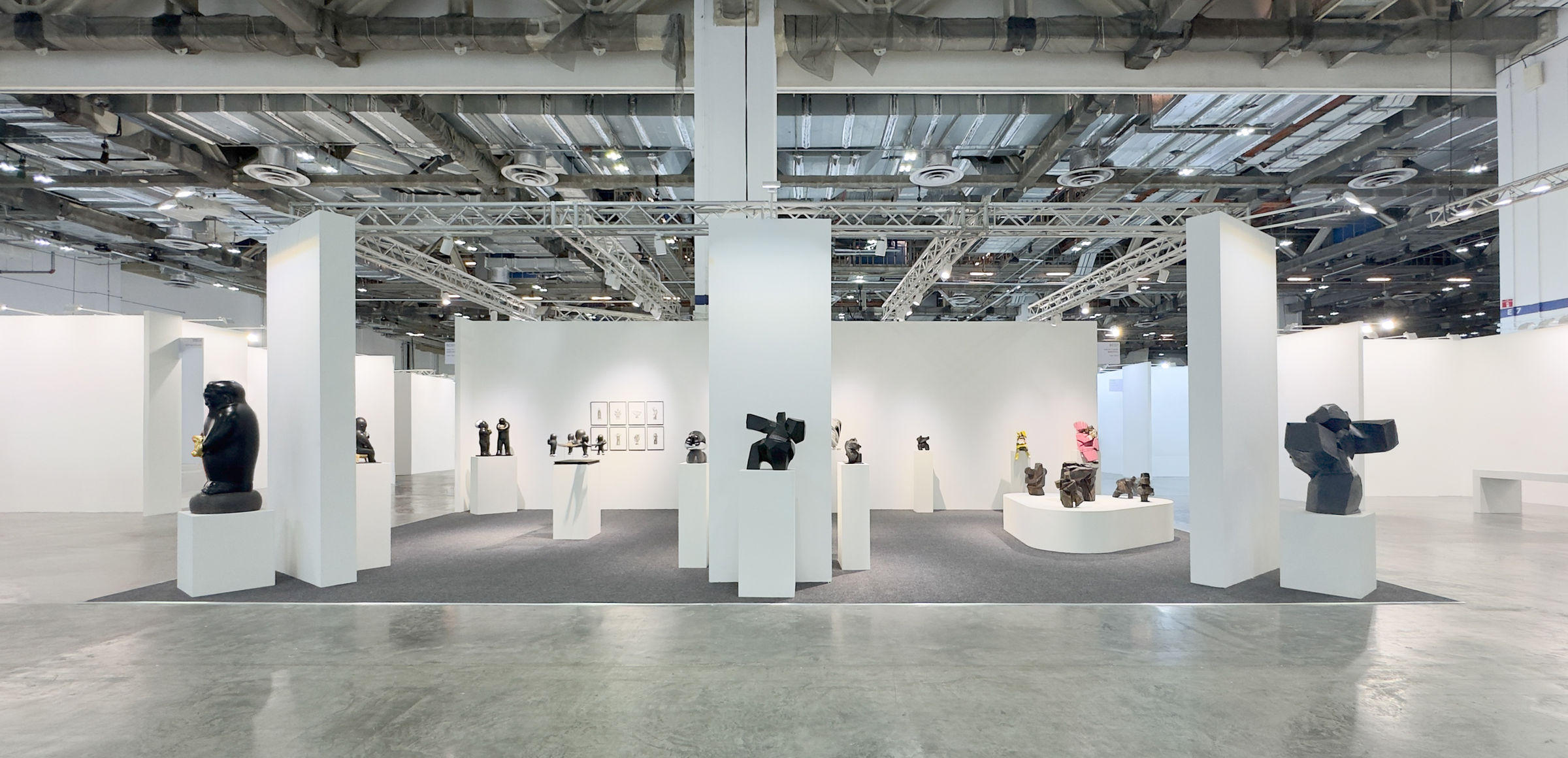
Singapore brings together international and regional galleries, an annual art fair calendar, major public institutions including the National Gallery Singapore and the Singapore Art Museum, and specialist storage, conservation, insurance and art-logistics providers. For collectors and family offices operating across the region, that concentration of expertise makes the city an effective base for sourcing, assessing, protecting and managing significant works.
The asset
Art as an asset class
Fine art behaves differently from listed financial assets, but liquidity, volatility and performance vary materially by artist, segment, price level and holding period. Art is a tangible, finite asset whose value is shaped by quality, provenance, condition, cultural relevance and market demand. It also carries cultural and dynastic meaning, which is why some family offices treat art as a deliberate component of their collection and wealth strategy rather than solely as a passion purchase.
Global art market, annual sales ($bn), 2019–2025. Source: The Art Basel & UBS Art Market Report 2026, Arts Economics.
Our art investment advisory services in Singapore
I
Market strategy
A data-informed strategy tailored to your objectives, risk appetite and time horizon, supported by the Zurani Intelligence Engine and decades of market experience.
II
Acquisitions and sourcing
Discreet access to museum-quality and off-market works through our global network, with full diligence on provenance, condition and pricing before you commit.
III
Collection management
Ongoing oversight of composition, performance, conservation, storage and insurance, with rebalancing as markets and goals evolve.
IV
Art-backed lending
For collectors who prefer to retain ownership, we facilitate introductions to specialist lenders to raise liquidity against a collection without selling it.
V
Estate, tax and succession
Structuring and intergenerational transfer with leading art-law specialists to ensure a collection passes to the next generation efficiently and intact.
In practice
Costs, risks and the Singapore market
Fees, premiums and liquidity
Buying well means understanding the full cost of ownership, including auction premiums, advisory and transaction fees, transport, insurance, storage and conservation. Art is also an illiquid asset, so we consider likely holding periods and potential routes to sale before an acquisition is made, not only when a collector decides to sell.
Storage, insurance and logistics
Singapore has specialist fine-art storage, insurance, conservation and logistics infrastructure supported by international transport links. Imported non-dutiable works may be stored in an approved Zero-GST warehouse with import GST suspended while the relevant conditions are met. GST generally becomes payable when a work is removed for local use, but is not payable when qualifying goods are exported directly or sold while remaining within the warehouse. Approved facilities storing artworks and antiques are subject to additional Customs controls. Zurani coordinates storage, condition monitoring, insurance and cross-border movement according to the requirements of each work and collection.
The Singapore tax position
Singapore does not impose a general capital-gains tax, but the treatment of a disposal depends on its facts and purpose. Gains that are capital in nature are generally not taxable, while profits arising from a trade or business may be subject to income tax. Singapore also levies GST at 9%. GST generally applies to imported works and to taxable local supplies made by GST-registered businesses, although a genuine private disposal outside a business may fall outside GST. Zurani coordinates the art-specific aspects with the collector’s legal and tax advisers before an acquisition, transfer or sale.
Questions
Common questions
Is art a good investment in Singapore?
Art can form part of a broader collection and wealth strategy, but it is illiquid and outcomes depend heavily on the quality of the work, the price paid, the holding period and the eventual route to sale. Singapore’s professional infrastructure, specialist expertise and connections across Southeast Asia make it an important base for acquiring and managing significant works. Zurani helps collectors approach those decisions with discipline and a long-term perspective.
How much do you need to start investing in art?
Serious collecting is possible at different levels. What matters is buying quality with discipline and ensuring that each acquisition fits a clear strategy. Zurani works with partners from a first significant purchase through to the development and management of substantial collections.
Is there capital-gains tax, GST or import duty on art in Singapore?
Singapore does not impose a general capital-gains tax, and ordinary works of art are not subject to customs duty. However, imported works generally attract import GST at the prevailing rate, and taxable local sales by GST-registered businesses may also attract GST. A genuine private disposal outside a business may fall outside GST, while profits arising from art trading or another business activity may be taxable as income. Zurani coordinates the art-specific aspects with specialist legal, tax and customs advisers so that each transaction is considered in its proper context.
What returns can art investment offer?
There is no single return that applies across the art market. Outcomes vary materially by artist, quality, provenance, price level, acquisition cost, holding period and route to sale. Public indices may provide useful market context, but they do not reflect the experience of every collection or fully account for liquidity and transaction costs. Zurani focuses on the individual work, the price paid and its place within a disciplined long-term strategy.
Can you borrow against an art collection?
Yes. Zurani reviews the collector’s portfolio, liquidity requirements and broader objectives, then advises on the types of bank or specialist lending institution likely to be most suitable. We facilitate introductions and coordinate the art-specific information required for the process. Credit assessment, approval and lending terms remain the responsibility of the lender.
What should collectors consider when storing art in Singapore?
Singapore offers specialist climate-controlled storage, conservation and fine-art logistics services, including facilities approved under the Zero-GST Warehouse Scheme, where import GST is suspended while a work remains in the warehouse. The appropriate arrangement depends on the work, its materials, condition, insurance requirements, frequency of movement and whether it will remain in Singapore, be exported, or be removed for local use. Permits, licences or other controls may apply to particular works, materials or countries of origin. Zurani coordinates these requirements as part of the collection-management process.
How does temporary importation for an exhibition or art fair work?
Singapore permits qualifying works to be imported temporarily for exhibitions, fairs and similar approved purposes, generally for up to six months, with GST and duty suspended while the scheme conditions are met. Security, permits and controlled-goods approvals may be required, and an extension must be approved before the temporary-import period expires. ATA Carnets may also be used for qualifying exhibition and fair goods. If a work is sold, transferred or not re-exported, the applicable permit, GST and other requirements must be addressed. Zurani coordinates the art-specific documentation, insurance and logistics with the relevant specialist providers.
What are the costs of buying and owning art?
The purchase price is only one part of the cost of ownership. Collectors should also account for auction premiums or transaction fees, advisory fees, transport, storage, insurance and conservation. Where works are imported, GST and cross-border documentation may add further costs. Zurani sets these costs out before a commitment is made so that the full financial implications of an acquisition are understood from the outset.
Next step
Begin with a conversation
Step One:
A confidential conversation about your objectives, tastes and horizon.
Step Two:
A tailored proposal: strategy, works and structure.
Step Three:
Acquisition and long-term stewardship of the collection.
Institutional mandates require institutional rigour. We’d welcome a confidential conversation about your art strategy.
Insights
From our writing
Abu Dhabi · Dubai · London · Doha